





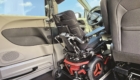

Key Benefits
Stability for driving control:
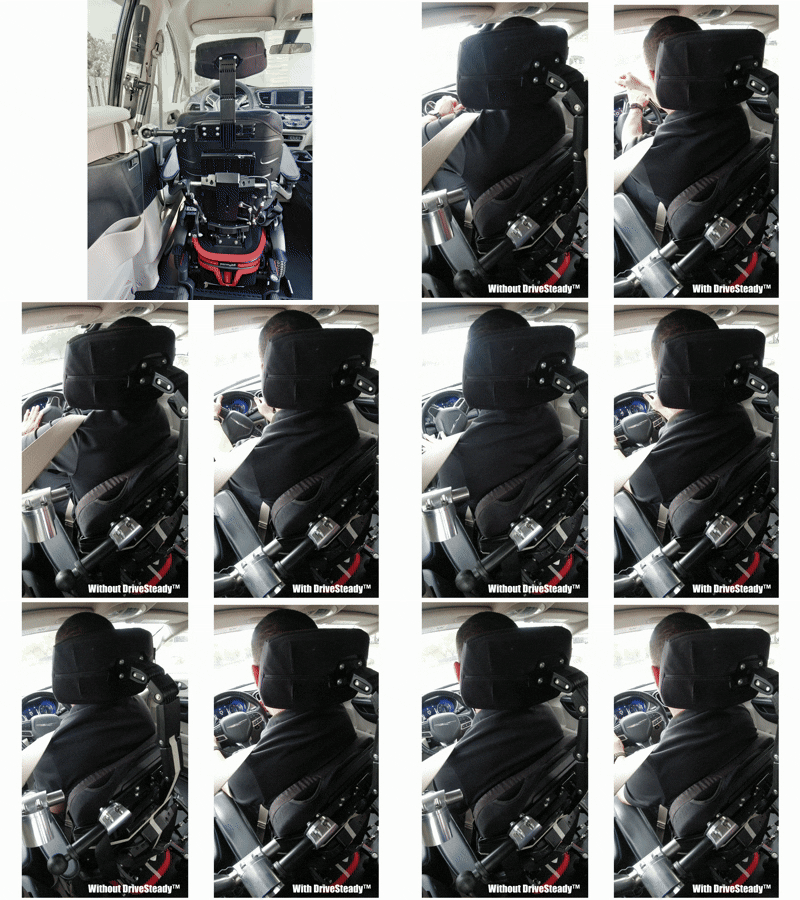
Helps prevent unintended steering, braking, or acceleration inputs by minimizing body movement caused by wheelchair seat sway.
More confidence:
Keeps your torso and arms steadier during turns, bumps, and sudden stops, so driving feels calmer and more controlled.
Seamless, passive engagement:
Docks automatically as you lock down your wheelchair, with no extra steps, buttons, or electronics required.
Why DriveSteady™ Is Needed
Even the best driving controls can’t fix a simple truth: power wheelchairs weren’t designed for driving a vehicle. DriveSteady™ exists to solve a problem that every wheelchair driver quietly fights.
Even the best driving controls can’t fix a simple truth: power wheelchairs weren’t designed for driving a vehicle. DriveSteady™ exists to solve a problem that every wheelchair driver quietly fights.
An able-bodied driver adjusts their seat without thinking about it—distance to the pedals, angle to the wheel. That optimal position, combined with a sturdy driver’s seat, gives them the confidence to brake, turn, or accelerate without hesitation.
You see this clearly when a driver hits the brakes hard: the driver stays planted, but the passenger instinctively reaches for a handle. The difference is simple—the passenger isn’t braced.
Now compare that to a power wheelchair driver. They can’t use their feet or hands to brace themselves the same way. To compound the problem, they’re not sitting on a rigid automotive seat—they’re on a soft, articulated power wheelchair seat that can wobble, sway, and flex with every bump or abrupt movement. Because the lockdown only anchors the base of the wheelchair—and often has a bit of play—the chair can lock at a slightly different angle each time.
Conclusively: a wobbly seat, no ability to brace, and an inconsistent securing angle. All of that takes away the driver’s confidence to hit the brakes hard or steer decisively when driving demands it.
In hopes of avoiding evasive maneuvers, they often drive slower (especially around corners), leave unusually large gaps ahead of them, and even avoid highways. Unfortunately, evasive maneuvers are not a matter of if, but when.
That’s exactly the gap DriveSteady™ is designed to close.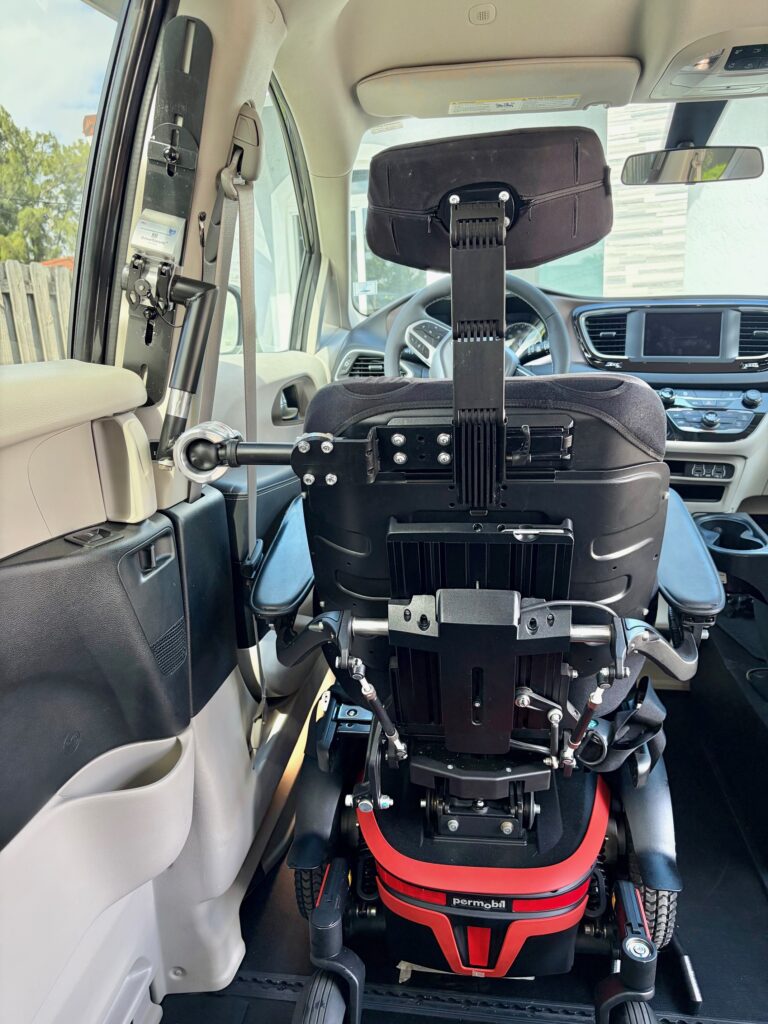
1. Power wheelchairs are designed to be soft, not stable
Power chairs are engineered for comfort, not for vehicle dynamics. They’re built with:
- Suspension to absorb bumps
- Recline, tilt, and elevate functions
- Cushioned, flexible backrests
All of that is great for everyday use—but in a moving vehicle, that same flex and motion turns into wobble and seat sway whenever the vehicle turns, stops, or hits a bump.
2. Driving controls are highly sensitive to small movements
Hand controls, joysticks, and electronic input devices are designed to react to small, precise movements. That’s their job.
But when your seat moves, your body moves with it. When your body rocks or your arm gets pulled by the seat shifting:
- A tiny, unintended push or pull can turn into steering, braking, or acceleration.
So instead of every input being intentional, the vehicle starts reacting to the chair’s motion—not just the driver’s decisions.
3. Wobble + sensitive controls = risk and stress
Together, a moving seat and sensitive controls create a perfect storm:
- Unintended steering or pedal/hand control inputs
- Overcorrection and “chasing” the vehicle just to stay in lane
- Seat bouncing that can trigger driver-induced oscillation and increase the risk of loss of control
The result? You hesitate to brake hard, leave excessive gaps, avoid speed, and corner overcautiously. That hesitation isn’t just frustrating — it’s hazardous.
How DriveSteady™ Works
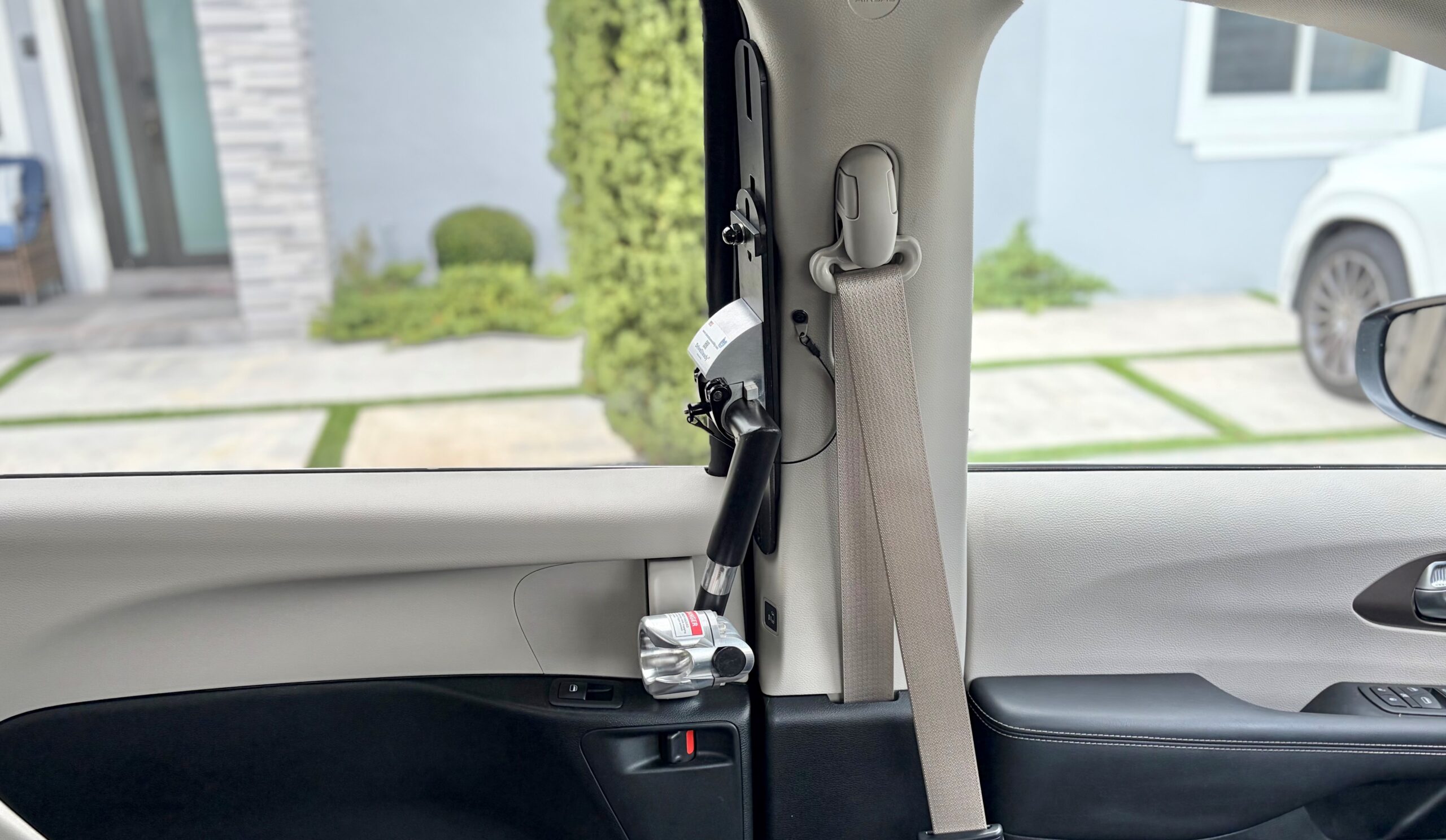
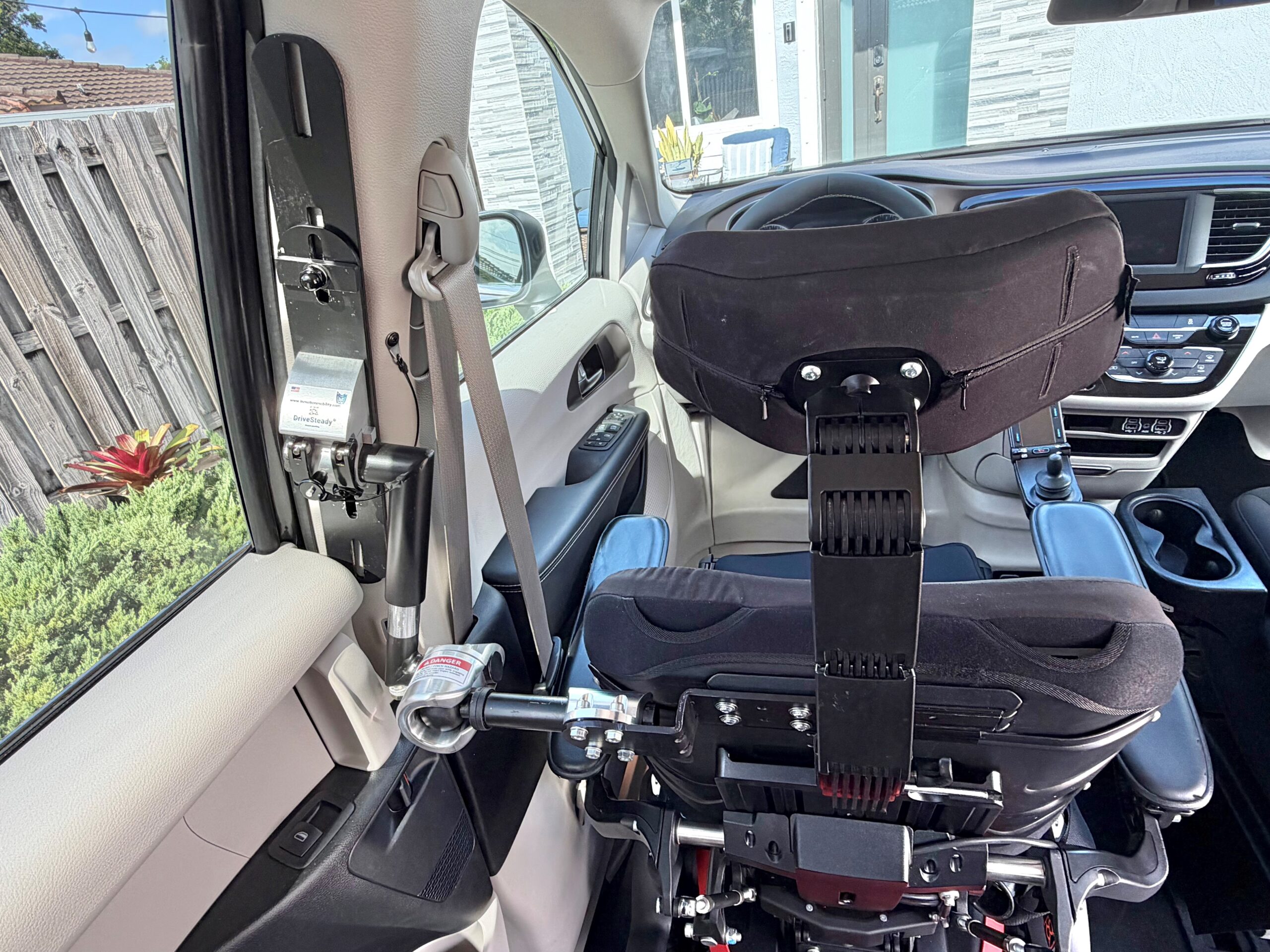
DriveSteady™ is a passive, mechanical system
that works with
your chest strap and existing lockdown to keep your wheelchair—and
your body—steady while
you drive.
DriveSteady™ is a passive, mechanical system that works with your chest strap and existing lockdown to keep your wheelchair—and your body—steady while you drive.
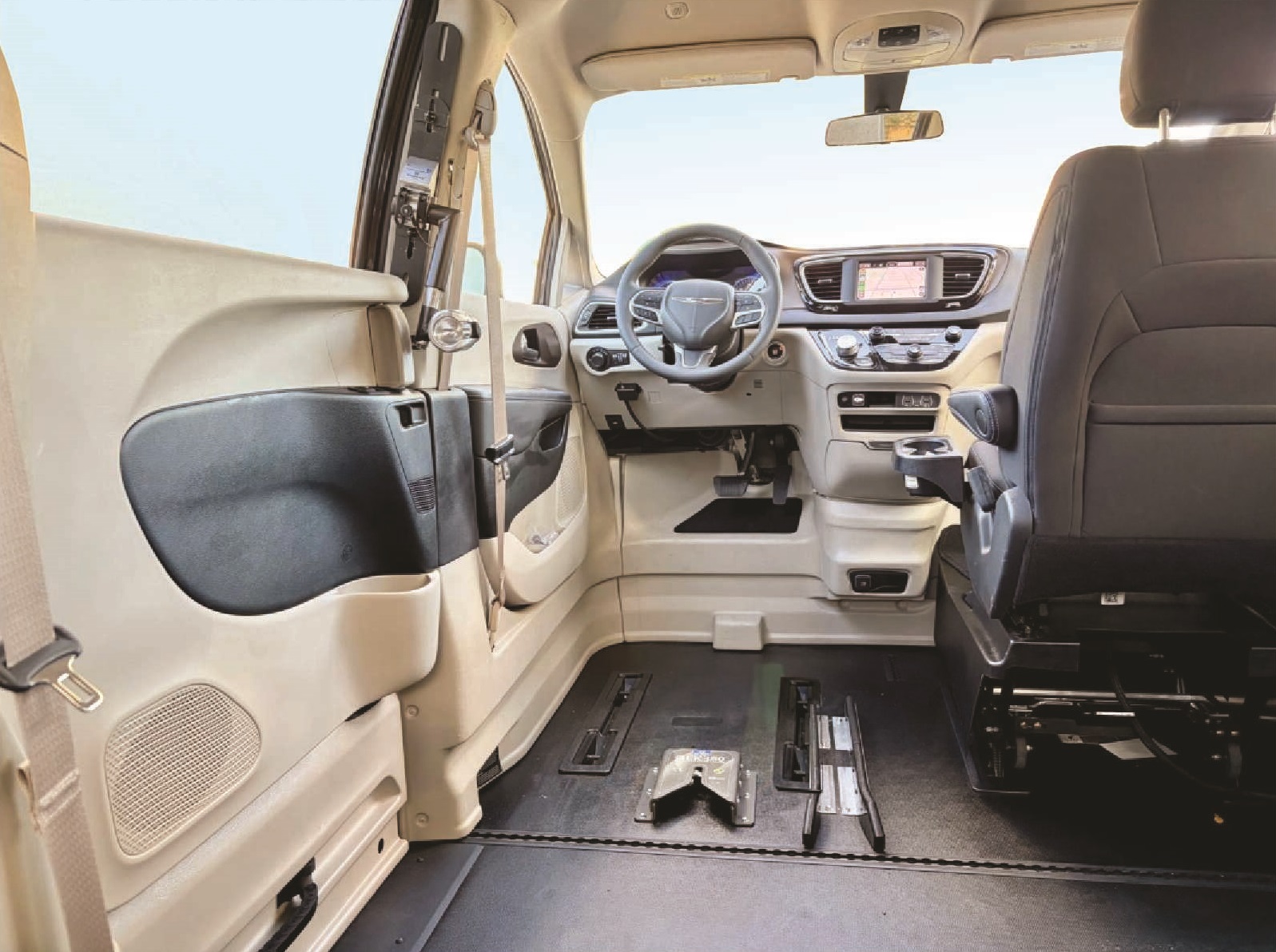
1. Follow the guiderail into your driving position
A built-in guiderail on the floor leads your wheelchair along a precise path and angle toward the existing lockdown system (similar to how a car-wash rail guides a vehicle).
- Ensures a consistent approach every time
- Reduces effort and guesswork in lining up to the lockdown
2. Lock down and dock automatically
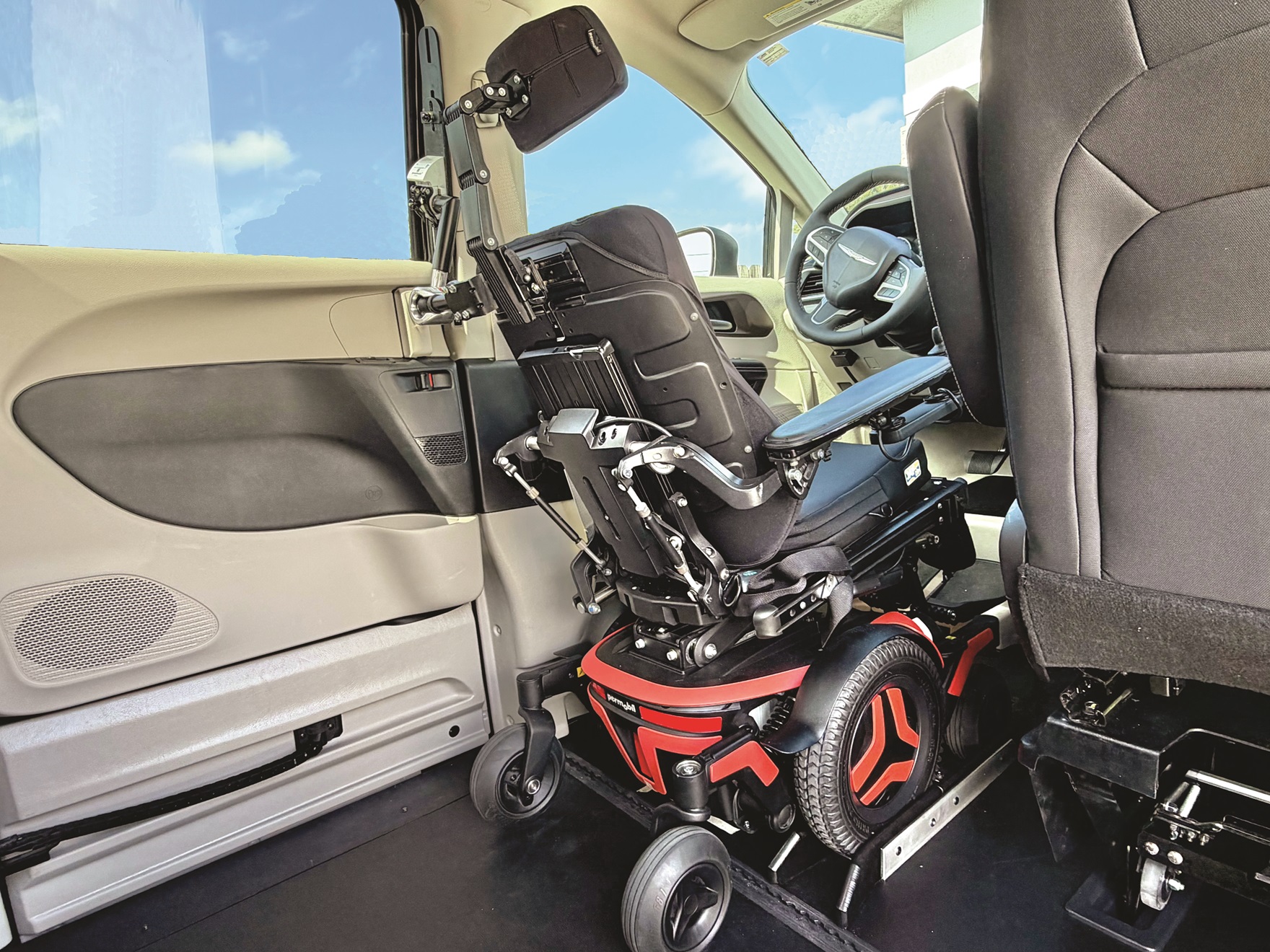
As you roll along the guiderail and engage your standard wheelchair lockdown, the backrest receiver naturally aligns and docks with the DriveSteady arm.
-
Docking happens in the same motion as lockdown
-
No extra latches, buttons, or adjustments
3. Drive with a stabilized seat and steady upper body
Once docked, DriveSteady anchors your wheelchair backrest to the vehicle, stabilizing your seat for more controlled driving.
-
Helps prevent unintended steering, braking, or acceleration inputs
- Keeps your torso and arms steadier through turns, bumps, and sudden stops
- Lets you focus on driving—not on wobble or sway
Frequently Asked Questions
Any power wheelchair with suspension or reclining, tilting, or elevating seat functions is susceptible to flex, rock, or sway when used as the driver’s seat. Anchoring the backrest can significantly improve support and stability, enhancing control and driving safety.
DriveSteady™ goes beyond comfort. For drivers who operate a vehicle from a wheelchair, stabilizing the seat and upper body can be crucial for maintaining safe, consistent control of the vehicle.
No. DriveSteady™ is a device that anchors a power wheelchair’s backrest to the vehicle without altering or adding to the wheelchair’s existing support structure or headrest system.
No. DriveSteady™ is a device that anchors a power wheelchair’s backrest to the vehicle without altering the wheelchair’s existing support structure or interfering with the occupant restraint system.
No. DriveSteady™ does not provide or replace the driver’s occupant restraint system and does not interfere with it. It should be used in conjunction with an appropriate torso belt and seatbelt system to be most effective.
DriveSteady™ is designed to work with, not instead of, WC19-compliant wheelchairs and securement systems. It does not change how the wheelchair is locked down or how occupant restraints are applied; it supplements those systems by stabilizing the backrest and reducing seat movement while driving. Final responsibility for WC19 compliance rests with the chosen wheelchair, securement system, and installation.
Crash testing of DriveSteady™ as a standalone “seat” or tie-down system does not apply. DriveSteady™ is not a vehicle seat, wheelchair tie-down, or occupant restraint system, and it is not intended to replace any WC19- or FMVSS-compliant securement or seating system. It is an add-on device that anchors a power wheelchair’s backrest to the vehicle (without locking it), in addition to the required wheelchair lockdown and occupant restraints. DriveSteady™ is designed so it does not modify the seat structure or how the seat is secured to the vehicle.
FMVSS 207 sets strength and anchorage requirements for vehicle seating systems, including the seat and its backrest. DriveSteady™ is not a vehicle seat and does not replace or certify any FMVSS 207–compliant seat or wheelchair securement.
Instead, DriveSteady™ is an add-on device that anchors a power wheelchair’s backrest to the vehicle. It does not lock or rigidly fix the backrest, and it is not a seat or backrest support structure. DriveSteady™ is designed to supplement stability and reduce seat wobble and backrest movement while driving, without modifying the seat structure.
Yes. DriveSteady™ can be detached from the B-pillar base by lifting the quick-release levers and removing the quick-release safety pin. The floor guiderails are generally placed outside the OEM seat base footprint and can also be made removable if necessary.
While tilting, elevating, and reclining your wheelchair remain fully under your control. DriveSteady™ and the floor guiderail are set up to guide your wheelchair into a repeatable driving position, helping you achieve a consistent driving posture.
- Memory seating on your wheelchair is highly recommended to help you return to the same driving posture each time and make lining up with the coupler easier.
- Elevating the seat so the footrest clears over the lockdown is not an issue—the DriveSteady™ coupler is positioned to engage simultaneously with the lockdown when you roll into your final driving position.
The wheelchair-mounted “stinger” ball-end is positioned on the back of the backrest and adjusted so that it extends beyond the user’s upper arm, but remains within the profile of the wheelchair’s armrest, rather than sticking out past it. In other words, if your armrest clears a doorway, the stinger should be set up to clear as well